
Last reviewed: August 2026. Mission dates and outcomes change quickly — check the linked sources before relying on anything here.
Moon mining means extracting material that is already on the Moon and turning it into something useful, either for customers on the lunar surface and in cislunar space, or for customers back on Earth. The technical term is in-situ resource utilisation, usually shortened to ISRU.
The reason it matters is arithmetic. Every kilogram sent from Earth has to be lifted out of Earth's gravity well, and that remains the single largest cost in any lunar operation. A kilogram of water already sitting in a crater at the lunar south pole is worth far more, in place, than a kilogram of gold on Earth — because the alternative is paying to fly it 384,000 kilometres.
This page sets out what is actually there, how you would get it out, who has landed so far, who is paying for it, and where the legal position stands. We try to be specific about which parts are proven, which parts are laboratory-stage, and which parts are still marketing.
The Moon has no atmosphere, no liquid water and no biology, so its resources are mineral and physical rather than biological. Five categories matter commercially, and they are not equally credible.
Water ice is stable in the permanently shadowed regions (PSRs) of craters near both lunar poles, where the crater floor has not seen sunlight for billions of years and temperatures sit below about −170 °C. Orbital instruments — LRO, LCROSS, Chandrayaan-1's Moon Mineralogy Mapper and others — have detected hydrogen signatures and, in the LCROSS impact plume, water directly.
Water is the highest-value lunar resource because it is three products at once: drinking water, breathable oxygen, and — split into hydrogen and oxygen — cryogenic rocket propellant. A propellant depot in cislunar space fed by lunar water changes the economics of everything beyond low Earth orbit.
The honest caveat: we know hydrogen is there. We do not yet know, at the resolution a mining engineer needs, in what form, at what concentration, how deep, or how it is distributed across a given crater floor. That uncertainty is precisely why prospecting missions and resource data have commercial value today, well before any extraction happens.
Roughly 40 to 45 per cent of lunar regolith by mass is oxygen, chemically bound in oxides: silica, alumina, ilmenite (iron-titanium oxide), and others. It is everywhere on the Moon, not just at the poles, and it does not require finding a special deposit.
The catch is that it is bound, not free. Breaking those chemical bonds takes energy, and energy on the lunar surface means either a large solar array plus storage for the 14-day night, or nuclear power. Oxygen is by mass the majority of a rocket's propellant load, so producing it locally is worth a great deal — but it is an energy business as much as a mining business.
Extract oxygen from regolith and you are left with metal. Iron, titanium, aluminium and silicon are all present in usable quantities. None of them is scarce on Earth, so none of them justifies a return trip. In place, they are structural material, solar cell feedstock, radiation shielding and 3D-printing stock. This is the least glamorous and most likely-to-happen part of lunar resources.
Helium-3 is implanted in the top few metres of regolith by the solar wind over billions of years, and it is genuinely rarer on Earth. It is a candidate fuel for aneutronic fusion, which would produce far less neutron radiation than conventional deuterium-tritium fusion.
Two facts are usually left out of the excitement. First, the concentration is measured in parts per billion — extracting a meaningful tonnage means processing an enormous volume of regolith and heating it to several hundred degrees. Second, there is currently no reactor anywhere on Earth that can burn Helium-3 to produce net power. It is a resource in search of a market, and any business case built on it should be read as a very long option rather than a plan.
Platinum group metals (platinum, palladium, rhodium, ruthenium, iridium, osmium) are delivered to the lunar surface mainly by metallic asteroid impactors, and are therefore concentrated around impact sites rather than spread evenly. Rare earth elements are associated with the KREEP terrain, a region of the near side unusually rich in potassium, rare earths and phosphorus.
These are the resources with obvious Earth value, and they are the basis of most "trillion dollar" headlines. They are also the least characterised at extraction-relevant resolution, and they carry a commercial trap worth stating plainly: succeed at scale in supplying a scarce metal and you destroy the scarcity premium that justified the mission. Any serious PGM business case has to model its own effect on the price.
The short version. Water and oxygen have a customer in space and no substitute. Metals have a customer in space and low value on Earth. Helium-3 and PGMs have a large notional Earth value and no proven route to market. Read every lunar business plan against that ranking.
Almost every agency and company currently planning surface operations is targeting one relatively small area: the lunar south pole. That is not coincidence or herd behaviour. It is because of an unusual piece of geometry.
The Moon's rotational axis is tilted only about 1.5 degrees relative to its orbit around the Sun. On Earth, a 23.5-degree tilt gives us seasons; on the Moon, near-zero tilt means the Sun stays permanently close to the horizon at the poles. Two consequences follow, and they happen to be the two things a mining operation needs:
Power and water, within driving distance of each other. That single fact explains the concentration of missions around Shackleton, Nobile, Mons Mouton and the surrounding terrain, and it explains why access to specific ridgelines — not the Moon in general — is what has strategic value.
It also creates the obvious problem: the useful real estate is small, and everyone knows where it is. That is the argument behind resource registration and coordination, discussed further down this page.
"Extracting resources from regolith" is where most coverage stops. Here are the four routes that are actually being developed, with an honest note on where each one stands.
| Process | What it does | Trade-offs |
|---|---|---|
| Molten regolith electrolysis (MRE) | Melts regolith to roughly 1,600 °C and passes a current through it, splitting the oxides directly. Oxygen comes off at the anode; molten metal alloy collects at the cathode. | Highest oxygen yield and produces metal as a saleable by-product. Needs a great deal of power and electrode materials that survive molten silicate. Blue Origin's Blue Alchemist work is the best-known example. |
| Hydrogen reduction of ilmenite | Heats ilmenite-rich regolith to around 900 °C with hydrogen; the reaction produces water, which is then electrolysed into hydrogen (recycled) and oxygen (kept). | Lower temperature and lower energy than MRE, and chemically well understood. Only liberates a fraction of the available oxygen and needs ilmenite-rich feedstock, so it is site-dependent. |
| Carbothermal reduction | Uses carbon or methane at high temperature to reduce silicates, producing carbon monoxide which is processed into water and then oxygen. | Works on a wider range of feedstock than hydrogen reduction. Requires careful management of the carbon loop so the reagent is not lost. |
| Water ice extraction | Mining or thermally mining ice-bearing regolith in permanently shadowed craters, then purifying and electrolysing the water. | By far the least energy-intensive route to oxygen and hydrogen — if the ice is there in workable concentration. Operating in a cryogenic, permanently dark environment is a hard engineering problem in its own right, and the resource is still poorly characterised. |
Every one of these has been demonstrated in a laboratory on Earth using regolith simulant. None has yet been demonstrated at meaningful scale on the lunar surface. That gap — laboratory to flight hardware — is where most of the public funding in this sector is currently aimed, and it is the gap in which most of the commercial risk sits.
See Public Funding for the programmes financing this work, including the ESA-ESRIC Space Resources Challenge and NASA's ISRU technology lines.
The first wave of customers are space agencies, followed by operators who need material on the Moon to build and sustain assets. The model is to support a developing lunar economy: enable terrestrial customers to explore and verify resources, and a lunar presence develops from there. The revenue lines are:
ISRU support services. Customers extracting and processing lunar material need specialised missions around the core activity: further resource assessment, transport of extracted material between processing sites, and deployment of ISRU equipment.
Data and mapping services. On-lunar customers need current resource data, terrain analysis, route planning and mapping, plus tailored consultancy. This is a real business today, before any extraction, because nobody can commit capital to a site they cannot characterise.
Mission services and control. Mission planning, operations and control for customers who own their own landers or infrastructure but not the expertise to run a lunar campaign. It leverages accumulated mission experience and produces recurring service revenue rather than one-off hardware sales.
Here the target customers are terrestrial mining and energy companies seeking to diversify their resource portfolios and secure access to high-value lunar resources such as platinum group metals and water ice. The goal is a commercially viable lunar resource extraction industry, built in sequence: de-risk exploration, attract investment on the strength of that de-risking, then control the supply of landers and of resource location data.
That sequence matters. The company that owns the resource data is in a strong position long before anyone owns a mine, in the same way that seismic survey data has value in terrestrial oil and gas independently of any well being drilled.
A note on timescales. Nothing on this page describes a business that returns capital in three years. Data, mapping and delivery services can generate revenue now. Extraction at scale is a 2030s proposition at the earliest, and any prospectus suggesting otherwise deserves scepticism.
Commercial lunar landing is now something several companies have done, which was not true three years ago. It is still something most attempts get partly wrong. This table tracks the record, because delivery capability is the precondition for everything else on this page.
| Mission | Operator | Date | Outcome | What it proved |
|---|---|---|---|---|
| Hakuto-R Mission 1 | ispace | April 2023 | Crashed | Altitude estimation failed over crater terrain; the software believed it had landed while still above the surface. |
| Peregrine Mission One | Astrobotic | January 2024 | Never reached the Moon | A propulsion valve anomaly caused propellant loss shortly after launch; the mission ended in Earth's atmosphere. |
| IM-1 “Odysseus” | Intuitive Machines | February 2024 | Landed, tipped over | First US soft landing since Apollo, and first ever by a private company. A disabled laser rangefinder left the lander with degraded altitude data; it came down faster and sideways but stayed partly functional. |
| Blue Ghost Mission 1 | Firefly Aerospace | March 2025 | Fully successful | Landed upright at Mare Crisium and operated ten NASA payloads through a full lunar day, shutting down a few hours into the lunar night. The first fully successful commercial lunar landing. |
| IM-2 “Athena” | Intuitive Machines | March 2025 | Landed sideways | Reached the surface near the south pole but ended up on its side in a crater, cutting power generation and ending the mission early. Rangefinder data noise was again a factor. |
| Hakuto-R Mission 2 “Resilience” | ispace | June 2025 | Crashed | Communications lost roughly 90 seconds before touchdown. ispace traced the anomaly to degraded laser range finder performance — the same class of problem that has now affected four separate missions. |
The pattern worth noticing: across four of these six missions the decisive failure was not propulsion, structure or navigation to the Moon. It was knowing how far above the surface you are in the final minute. Terminal-phase altimetry has been the recurring weak point of the entire commercial lunar programme, and it is a useful lens through which to read any new lander's technical claims.
As of August 2026 the near-term pipeline includes Astrobotic's Griffin Mission One to the south pole region, Blue Origin's Blue Moon MK1 “Endurance” — selected as the lander for NASA's first Moon Base mission — Intuitive Machines' IM-3, Firefly's Blue Ghost Mission 2 to the lunar far side carrying ESA's Lunar Pathfinder relay, and China's Chang'e-7, which is explicitly targeting south polar water ice.
On the crewed side, Artemis II flew its crewed lunar flyby in April 2026, and NASA has since restructured the sequence so that lander operations are demonstrated before a surface landing attempt. The practical effect for resources is a later crewed landing but a heavier near-term emphasis on robotic surface infrastructure — which is the part that matters for ISRU anyway.
Launch dates in this sector slip routinely. See Events for the missions and deadlines we are tracking, and Space Stocks and Space Funds for how listed operators trade around these attempts.
Every company named on this page is funded in significant part by a public programme. NASA's Commercial Lunar Payload Services (CLPS) initiative buys delivery as a service rather than building landers, and in 2026 NASA moved to raise the programme's cumulative ceiling from $2.6 billion to $4.2 billion while announcing the Moon Base initiative aimed at sustained presence near the south pole. In Europe, ESA's Argonaut logistics lander is the route to independent lunar surface access from around 2030.
For an investor, this is the most important due diligence question in the sector: not what a company has built, but who is paying for it, under what contract type, and what happens when that programme ends. We set out the programmes, the contract structures and a framework for reading them on the Public Funding page.
There is no such thing as buying land on the Moon. The 1967 Outer Space Treaty, which almost every spacefaring nation has ratified, states in Article II that outer space and celestial bodies are not subject to national appropriation by claim of sovereignty, use, occupation or any other means. No country can own lunar territory, and no country can grant title to it.
What the Treaty does not clearly address is whether a company may own the material it extracts — the difference between owning a fishing ground and owning the fish. Several jurisdictions have legislated to close that gap on their own terms:
The practical problem is not ownership in the abstract. It is deconfliction. If two operators target the same illuminated ridge or the same ice-bearing crater floor, there is currently no binding international mechanism to decide who proceeds. The Artemis Accords propose safety zones; the Moon Agreement of 1979, which would have created a formal international regime, was ratified by almost nobody and is effectively dead.
That vacuum is why transparent registration of intent and activity matters commercially, well ahead of any binding regime. A public record of who intends to operate where is, at minimum, evidence of priority — and at best, the seed of the coordination mechanism that a real lunar industry will eventually require.
For investors: when a company claims “rights” to a lunar site, ask precisely what is being claimed and under which national framework. A registration is not a title deed, and anyone selling it as one should be treated accordingly.

The Lunar Resources Registry (LRR) identifies valuable resources on the Moon using remote sensing data, locating sites rich in platinum group metals, precious metals, rare earth elements, Helium-3 and water. It enables commercial and non-commercial organisations to acquire rights to explore and extract, and maintains a public record of who intends to do what, and where.
Lunar Resources Registry UG was funded by Space Ventures Investors Ltd and both founders, and is an alumnus of the European Space Agency Business Incubation Centre Hessen 2023, managed by CESAH. In September 2024 the Registry signed a memorandum of understanding with Thales Alenia Space's Space Business Catalyst.
If you have an academic or commercial interest in the Lunar Resources Registry and would like to add a location of interest, please get in contact.
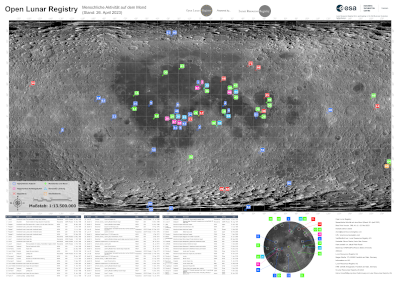
Explore the Moon with the Open Lunar Registry Map of human activity. It is updated regularly and is well suited to educational use.
View the commercial register for lunar mining and the evolution of registered resource sites.
Numerous companies are developing the technology and processes needed for lunar surface operations, alongside others building the enabling layer — CubeSats, launch, communications and navigation — required to operate around and on the Moon. A fuller directory is on our Space Mining Companies page.

Firefly Aerospace achieved the first fully successful commercial soft landing with Blue Ghost Mission 1 at Mare Crisium in March 2025, operating its payloads through a complete lunar day. Blue Ghost Mission 2 targets the lunar far side.
See where Firefly landed on the Moon.

ispace flies its Hakuto-R programme as a commercial lunar transportation service. Mission 1 (2023) and Mission 2 “Resilience” (June 2025) both ended in crashes, in each case traced to altitude sensing. Mission 2 carried a rover with a scoop intended to demonstrate regolith collection — the first commercial attempt at a resource-handling operation on the surface.
See how ispace as a listed company is performing.

Intuitive Machines has reached the surface twice. “Odysseus” (IM-1, February 2024) made the first private soft landing but came down hard and tipped over; “Athena” (IM-2, March 2025) landed sideways in a crater near the south pole and the mission was concluded early. The company holds the largest number of NASA-awarded commercial lunar task orders.
See how Intuitive Machines shares are performing.
These companies were competing for a place on the Moon over the last decade. Some are still central to the industry; several are not. Failure history is useful data, so we keep the list rather than quietly deleting it.
Astrobotic — active. Peregrine Mission One failed in 2024; Griffin is the follow-up, targeting the south pole.
ispace — active and listed. Two landing attempts, both unsuccessful, and a third programme in development.
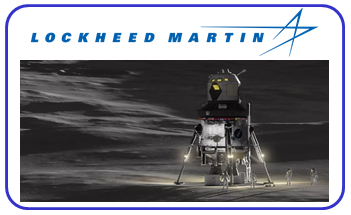
Lockheed Martin — active. Builds satellites and spacecraft including lunar lander concepts, and remains a prime across the Artemis architecture.
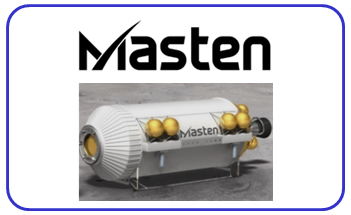
Masten Space Systems — ceased trading in 2022 and its assets were acquired. A cautionary example of a technically capable company running out of runway before the market arrived.
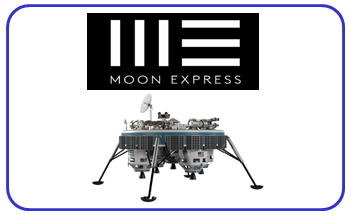
Moon Express — a Google Lunar X Prize team with lunar transportation and resource ambitions; no longer active in its original form.
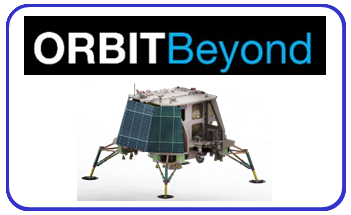
OrbitBeyond — an early CLPS awardee that withdrew from its task order, an early sign of how demanding the fixed-price delivery model would prove.
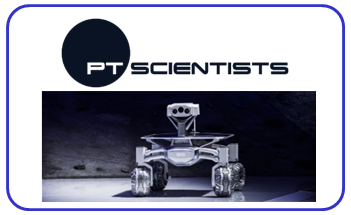
PTScientists — the German lander and rover team that entered insolvency in 2019; elements of the effort continued under new ownership.
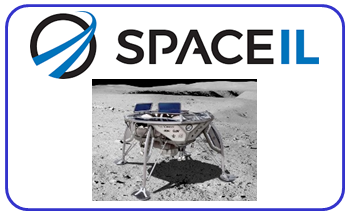
SpaceIL — its Beresheet lander reached the surface in 2019 but crashed on descent. A follow-on mission has faced repeated funding difficulty.
The survey takes about two minutes. Your answers are used only for our internal research and are not shared with third parties.
Asteroid Mining — the other half of space resources, and why it is a different business entirely.
Public Funding — NASA CLPS, ESA, ESRIC and the grant programmes behind every company on this page.
Events — Space Resources Week, challenges, and the mission dates worth tracking.
Space Mining Companies — the wider directory.


